
Businorem ipsum dolor sit amet cons interdum quam duis variuy time honored tradition etting .
Businorem ipsum dolor sit amet cons interdum quam duis variuy time honored tradition etting .
 October 30, 2026
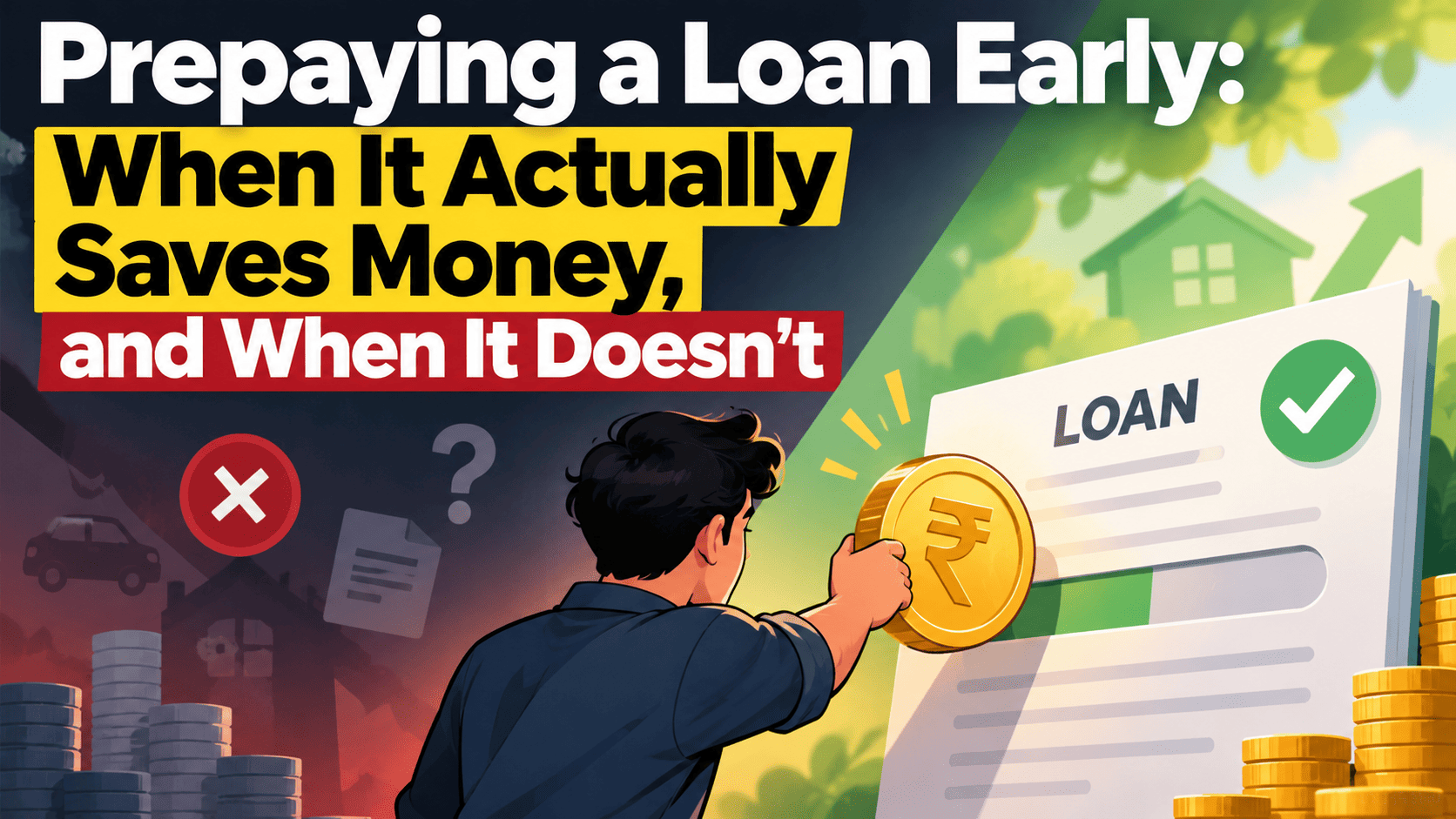
Coming into some extra money, a bonus, a maturing fixed deposit, an inheritance, tends to raise the same question for anyone carrying a loan: should this go toward closing the debt sooner. The instinct to say yes is understandable, and often correct, but not automatically so. Whether prepayment genuinely saves money depends on a set of specifics, the loan’s structure, its stage in the tenure, and what else that money could otherwise be doing, that are easy to overlook when the appeal of being debt-free sooner takes over the decision.
The case for prepaying rests on how interest is built into an EMI in the first place. In an amortised loan, a large share of each instalment goes toward interest in the earlier years, with the proportion going toward principal rising only gradually as the tenure progresses. This is why prepaying early in a loan’s life saves considerably more than prepaying the same amount closer to its end, since the outstanding principal, and the interest calculated on it, is at its highest in those first years.
Source: HomeFirst India — Home Loan Prepayment: Meaning, Rules, Charges and Benefits; Jupiter — Should You Prepay Your Personal Loan?
The regulatory landscape around this decision has also shifted meaningfully in the borrower’s favour. Effective January 1, 2026, the Reserve Bank of India bars banks and NBFCs from levying prepayment or foreclosure charges on floating-rate loans taken by individuals and micro and small enterprises for non-business use. This builds on an earlier rule already in place for floating-rate home loans, which carry no prepayment penalty for individual borrowers regardless of when the closure happens. Fixed-rate loans remain the exception: lenders are still permitted to charge a foreclosure fee on these, typically in the range of two to six percent of the outstanding principal for personal loans, and a capped charge for fixed-rate home loans.
Source: Moneyview — Personal Loan Foreclosure: Charges, Benefits & Disadvantages; Airtel — Personal Loan Foreclosure in India: Rules, Charges & Process; Ujjivan Small Finance Bank — Home Loan Prepayment Rules and Penalty Charges
Where a foreclosure charge does apply, the decision becomes a straightforward comparison rather than an emotional one: prepayment is worth pursuing only when the interest saved over the remaining tenure exceeds whatever penalty is charged for closing early. A high-interest personal loan, particularly one in the fifteen to twenty percent range, will usually clear this bar comfortably even after accounting for a foreclosure fee, since the interest being avoided is substantial enough to absorb the cost.
Source: Airtel — Personal Loan Foreclosure in India: Rules, Charges & Process
There is also a choice to be made in how a partial prepayment is applied, one that changes how much is actually saved. A part-payment can either reduce the tenure while holding the EMI steady, or reduce the EMI while holding the tenure steady. Reducing the tenure saves more total interest, since the loan closes sooner and less interest accrues over its remaining life, whereas reducing the EMI mainly eases monthly cash flow without shortening how long interest continues to be charged.
Source: Jupiter — Should You Prepay Your Personal Loan?
Prepayment stops being the obvious choice, however, once a few specific conditions are in play. Close to the end of a loan’s tenure, most of the interest has already been paid, and the amount left to save by closing early is often too small to justify using up a lump sum for it. The comparison also has to account for opportunity cost: if the funds set aside for prepayment could reasonably earn a higher return elsewhere than the loan’s own interest rate, for instance in a well-considered investment, prepaying the loan is not necessarily the more efficient use of that money, even though it may feel like the more prudent one. For a home loan carried by a borrower in a higher tax slab, the interest deduction available on that loan can offset a meaningful part of its effective cost, which is worth weighing against the appeal of an early payoff, particularly since it does not apply once the loan is closed.
Source: Upstox — How to Prepay or Foreclose Your Personal Loan; HomeFirst India — Home Loan Prepayment: Meaning, Rules, Charges and Benefits
It is also worth setting expectations correctly on what prepayment does and does not do to a credit profile. Closing a loan through prepayment does not, by itself, meaningfully lift a credit score beyond what a consistent repayment record was already achieving; the score reflects discipline over time more than the manner in which a loan concludes. What it may still do, on revolving credit in particular, is improve the utilisation ratio once the outstanding balance falls, though this is a secondary effect rather than the main reason to prepay.
Source: IDFC FIRST Bank — Personal Loan Prepayment: Benefits, Charges & Importance; Ujjivan Small Finance Bank — Home Loan Prepayment Rules and Penalty Charges
None of this should suggest prepayment is a marginal decision best avoided. Close to forty percent of home loan borrowers in India choose to prepay partially or fully within the first ten years of their tenure, and for most of them, it remains one of the more reliable ways to reduce a long-term financial obligation. The decision simply rewards being made with arithmetic rather than instinct, since the same lump sum that saves substantially in year two may barely register in year eighteen, and the loan carrying six percent interest deserves a different verdict than the one carrying eighteen.
Source: Ujjivan Small Finance Bank — Home Loan Prepayment Rules and Penalty Charges