
Businorem ipsum dolor sit amet cons interdum quam duis variuy time honored tradition etting .
Businorem ipsum dolor sit amet cons interdum quam duis variuy time honored tradition etting .
 November 3, 2026
As IRDAI explores a shared digital infrastructure for insurance, the real test will be balancing data accessibility with privacy, consent and accountability.
India’s proposed Public Insurance Registry (PIR) could address a longstanding challenge in the insurance ecosystem: fragmented information across insurers, intermediaries and other institutions. By enabling standardised and interoperable access to insurance information, the proposed infrastructure could improve transparency, policy servicing and decision-making across the sector.
However, connecting insurance data at scale introduces an equally important consideration: how can information become more accessible without compromising the privacy and rights of the individuals it represents?
This is particularly relevant because insurance records may contain sensitive personal, financial and health-related information. The value of a shared information infrastructure will therefore depend not only on the quality of data it makes accessible, but also on the safeguards governing its use.
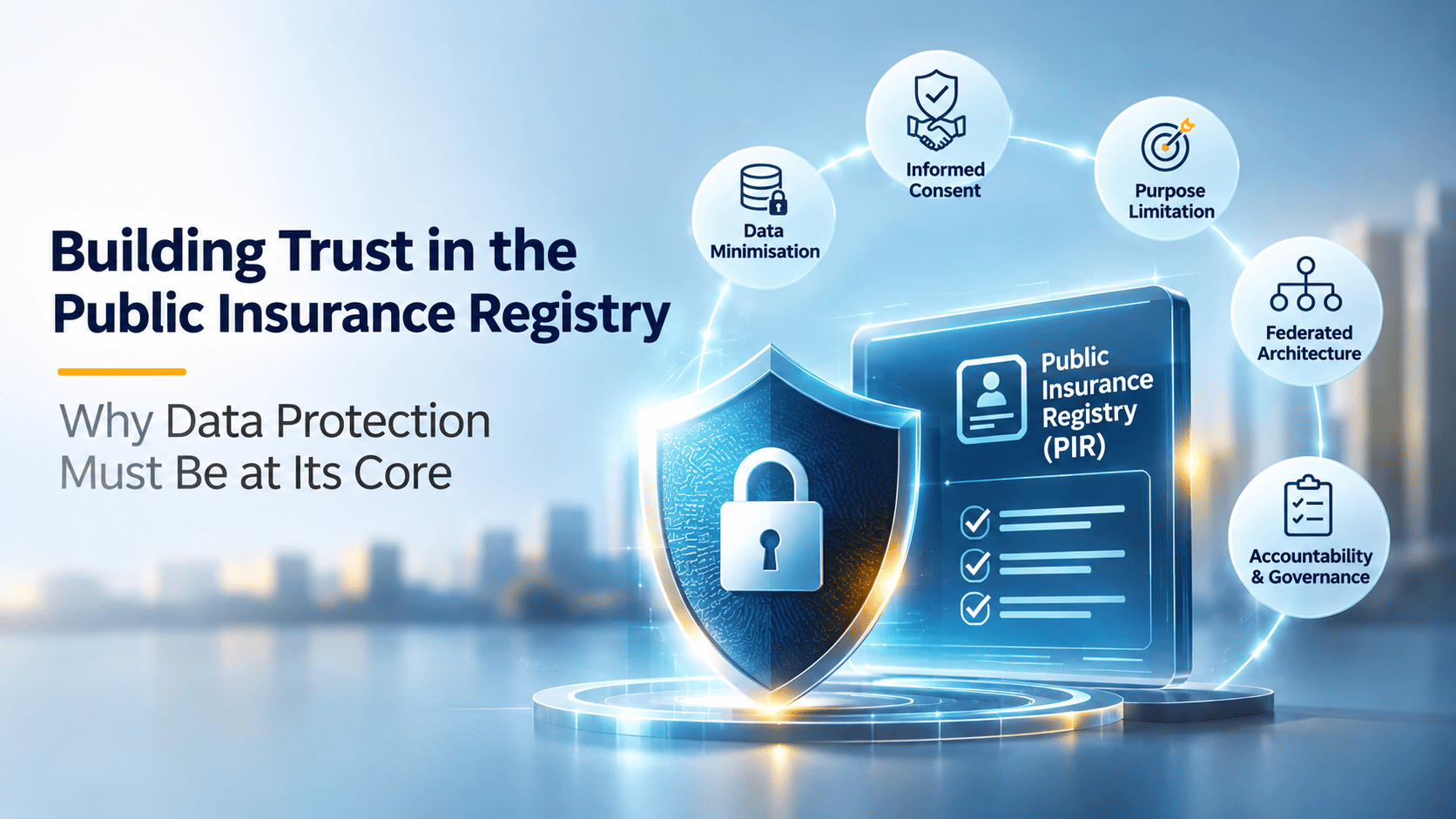
The proposed PIR envisages consent-based information sharing, allowing authorised stakeholders to access relevant information for defined purposes.
However, consent should not become a one-time procedural requirement. It needs to be specific, informed, purpose-linked, revocable and auditable.
Individuals should have clarity on what information is being accessed, who is accessing it and why. Equally important is ensuring that consent is not treated as blanket permission for unrelated or future uses of personal information.
For the PIR, establishing a transparent and accountable consent mechanism will be central to building policyholder confidence.
A common digital infrastructure can create opportunities for multiple stakeholders to use insurance information. Insurers, financial institutions, regulators and researchers may have different information requirements.
However, access should remain proportionate to the purpose for which it is sought.
For instance, a lender verifying whether an insurance policy has been assigned as collateral may not require access to the policyholder’s entire insurance history or unrelated personal details.
This makes purpose limitation and data minimisation essential. Only information necessary for a legitimate and authorised activity should be made available.
Without clearly defined access boundaries, a system designed to improve information flow could gradually expand into uses beyond its original intent.
An important design principle in the consultation paper is the proposed federated data architecture.
Rather than creating a central repository containing all detailed insurance records, the PIR envisages enabling information exchange while allowing underlying records to remain with the institutions that maintain them.
This approach, supported by data minimisation and controlled access, could reduce unnecessary duplication and concentration of personal information.
However, a federated model does not eliminate security risks. Every participating institution and access point becomes part of the broader data ecosystem. Consistent security standards, identity verification, access controls and accountability mechanisms will therefore be critical.
Data protection cannot rest solely with the institution operating the registry.
Insurers, intermediaries, financial institutions, technology service providers and other authorised participants may all interact with the infrastructure. Each participant must have clearly defined responsibilities for data access, processing, storage and security.
The framework should also support effective audit trails, access monitoring, incident reporting and mechanisms to address unauthorised disclosure or misuse.
Commercial confidentiality deserves attention as well. While standardised information may support industry-wide insights, proprietary pricing, underwriting methodologies and other commercially sensitive information must remain appropriately protected.
The proposed PIR has the potential to strengthen transparency and interoperability across the insurance ecosystem. However, these benefits will be sustainable only if policyholders trust the way their information is handled.
The challenge is not simply to make insurance data available across institutions. It is to establish clear boundaries around who can access it, for what purpose, under what authority and with what accountability.
As the framework moves from consultation towards detailed design and implementation, privacy-by-design, consent management, data minimisation and security governance must remain integral to its architecture.
The success of a digital public infrastructure should not be measured only by how much information it connects, but also by how responsibly that information is governed.