
Businorem ipsum dolor sit amet cons interdum quam duis variuy time honored tradition etting .
Businorem ipsum dolor sit amet cons interdum quam duis variuy time honored tradition etting .
 August 28, 2026
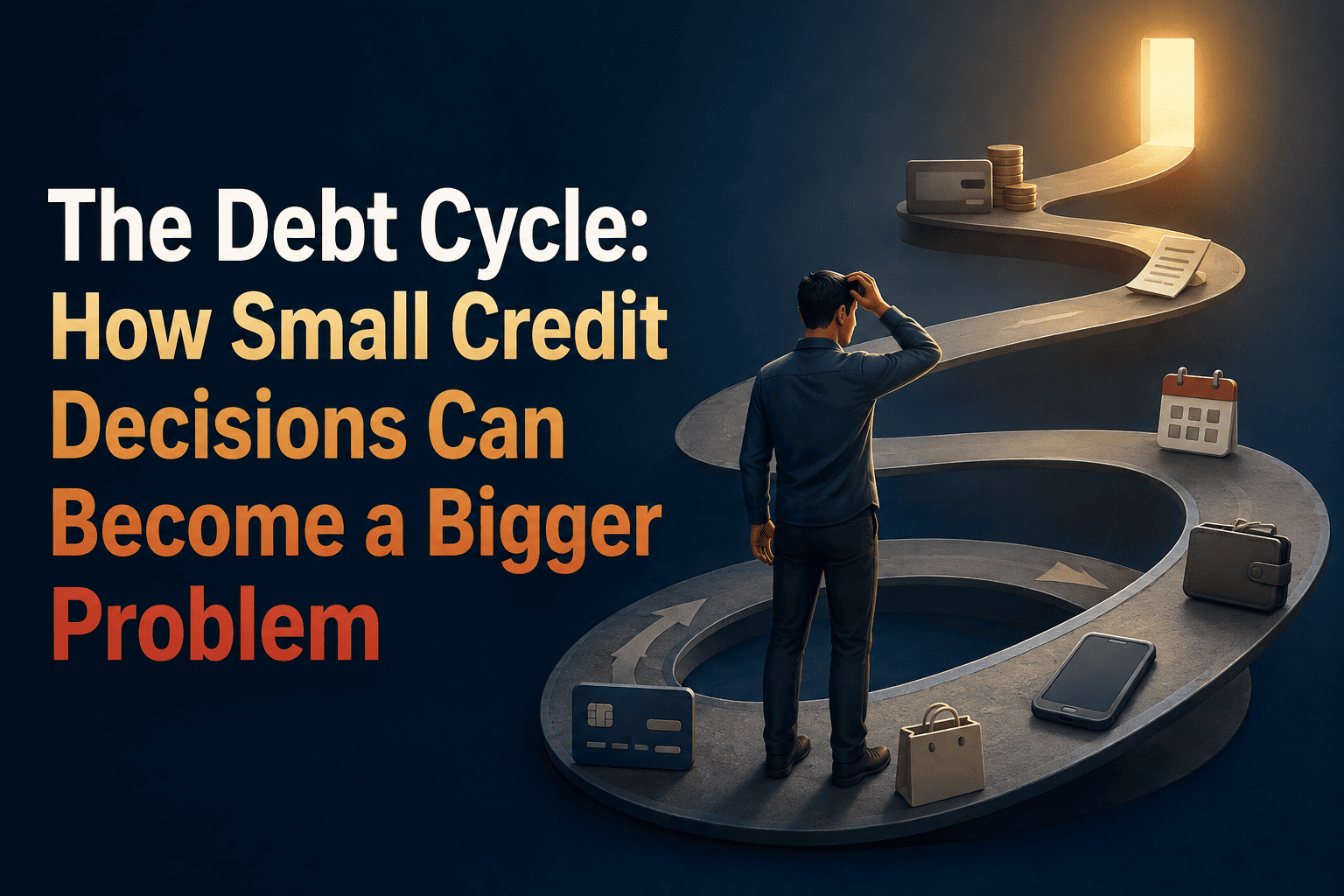
 Nobody plans to get stuck in debt. It usually happens in small steps that seem fine at the time. A late EMI payment here, a small personal loan there, one extra credit card because it felt convenient. None of these feel like a big deal on their own. But add them up over a year or two, and you often end up with a debt cycle that is hard to get out of.
It Usually Starts with a Small Gap
Most debt cycles do not begin because someone is bad with money. They begin because of a gap. Salary got delayed, there was a medical bill, a wedding in the family, or just a month where expenses were higher than usual. To cover it, people use whatever is fastest: a credit card, a quick personal loan, or a BNPL option. This is normal. Most people do this at some point, and it is not a problem by itself.
The problem starts when the same gap shows up again the next month, and the same solution gets used again. What was supposed to be a one time fix slowly becomes a habit, and the amount owed keeps building in the background.
Small EMIs Add Up Faster Than People Realise
A ₹2,000 or ₹3,000 EMI does not look scary next to a monthly salary. That is exactly why this stage is easy to miss. Each new loan gets checked against “can I afford this EMI right now” and not against everything else already being paid off. So, a person might end up paying a credit card bill, an EMI on a phone or appliance, a personal loan instalment, and a BNPL due, all at the same time. None of them look big individually, but together they can eat up a large chunk of the monthly income.
This also affects the Credit Score, even when payments are being made on time. Credit Bureaus do not just check whether you are paying. They also look at how much of your available credit you are using and how often you are applying for new credit. If both keep going up, the score tends to drop, even without a single missed payment.
When You Start Borrowing Just to Repay Older Debt
This is the stage where the cycle really tightens. It is when a new loan or credit card is not used to buy something, but to pay off an existing due, like paying one card’s bill using another card or taking a new personal loan just to combine older EMIs into one. At this point, debt stops being useful and starts being something you are just trying to keep up with.
It is also harder to get out of at this stage, because a falling Credit Score usually means the loans still available come at higher interest rates. So the debt gets more expensive right when it is already becoming harder to manage.
Signs Worth Noticing Early
A few signs tend to show up before things get out of hand. These include using credit for regular monthly expenses, not just occasional needs; paying only the minimum due on a credit card; taking a new loan before closing an older one; and borrowing mainly to pay off something else already owed.
One of these alone does not mean much. But if a few of them are happening together, it is worth pausing and taking a closer look. Checking your Credit Report regularly helps here. It shows every active loan, card, and repayment in one place, which is easy to lose track of when you are only looking at monthly budgets.
Getting Out Takes a Plan, Not Just One Big Payment
Breaking a debt cycle is not usually about paying off one large amount and being done with it. It is more about fixing the pattern: combining scattered EMIs into one manageable payment, holding off on new credit for a while, and building a small buffer so the next unexpected expense does not automatically mean borrowing again.
Debt on its own is not a bad thing. It is a normal part of managing money, especially when income and expenses do not always line up. The debt cycle happens when borrowing keeps happening without anyone stepping back to look at the full picture. So the way out is not really different from how it started. It is still one decision at a time, just made with a clearer view this time.