
Businorem ipsum dolor sit amet cons interdum quam duis variuy time honored tradition etting .
Businorem ipsum dolor sit amet cons interdum quam duis variuy time honored tradition etting .
 June 30, 2026
 India’s fintech revolution has transformed the mechanics of lending. Credit can now be sourced, underwritten, approved, and disbursed at a speed that would have been unimaginable a decade ago. Digital lending platforms, alternative credit scoring models, Account Aggregators (AA), Open Credit Enablement Network (OCEN), and AI-driven underwriting have fundamentally reshaped the lending ecosystem.
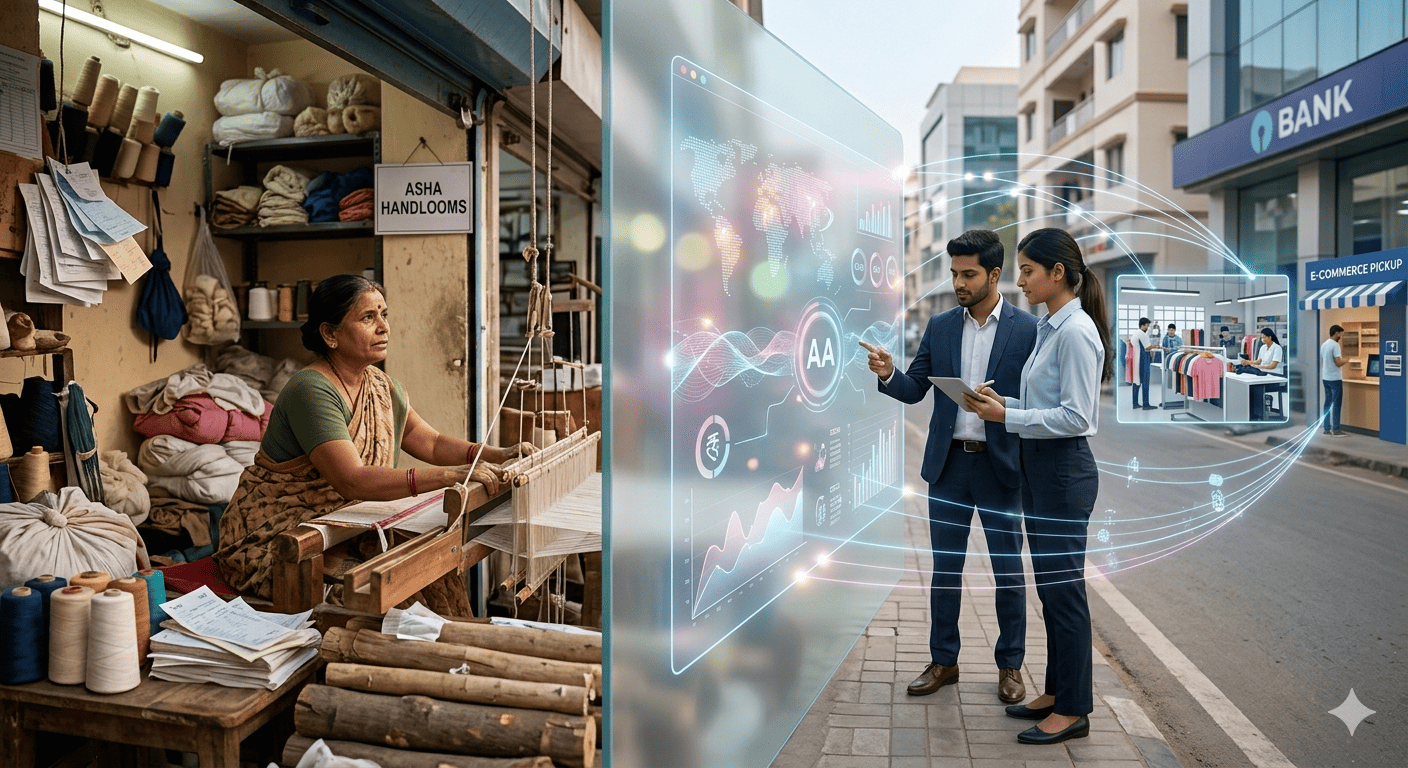
Yet, beneath this progress lies a stubborn paradox: despite unprecedented innovation, millions of Micro, Small, and Medium Enterprises (MSMEs) continue to struggle with access to formal credit.
This raises an important question: if technology has made lending faster, cheaper, and more accessible, why does the MSME credit gap continue to persist?
The answer lies in a reality that the industry is increasingly beginning to acknowledge: MSME lending has never been merely a technology problem. It is a problem of information, context, product design, and risk assessment. While fintech has undoubtedly improved the infrastructure of lending, many of the structural challenges that have historically constrained MSME financing remain unresolved.
The core challenge remains information asymmetry
At its heart, MSME lending has always been an information challenge.
Unlike large corporates, many small businesses operate with fragmented financial records, limited audited statements, informal supplier relationships, and cash flows that are not always fully visible through conventional banking channels. While fintech lenders today have access to significantly more data than traditional lenders, the availability of data does not automatically translate into better credit decisions.
A lender may be able to view bank transactions, GST records, and payment histories, but these data points often provide only a partial view of a business’s true financial health. Understanding repayment capacity, business resilience, and future cash flows still requires context that technology alone cannot fully capture.
As a result, the industry has become better at collecting information, but not necessarily better at reducing uncertainty.
Fintech has expanded access – but primarily for the digitally visible
Much of the success of fintech lending has been concentrated among businesses that already generate a digital footprint.
Enterprises using digital payments, GST systems, accounting software, e-commerce platforms, and formal banking channels are relatively easier to assess and underwrite. These businesses produce structured data that can be readily integrated into automated credit models.
However, a significant portion of India’s MSME landscape operates outside these ecosystems. Small manufacturers, local traders, rural enterprises, and micro-businesses often continue to rely on informal processes and limited digital infrastructure.
Consequently, fintech has succeeded in expanding credit access for businesses that are already visible within the formal financial ecosystem, while many of the most underserved enterprises remain difficult to assess and therefore difficult to finance.
The result is a more efficient lending system, but not necessarily a more inclusive one.
Lenders still ask MSMEs to adapt to products – not the other way around
One of the most overlooked barriers to MSME financing is the mismatch between lending products and business realities.
Despite the diversity of India’s MSME sector, lending solutions remain surprisingly standardized. Businesses operating in entirely different industries are often evaluated through similar frameworks and offered similar loan structures.
The reality is far more nuanced.
A retailer may require short-term inventory financing ahead of festive seasons. A manufacturer may need working capital aligned with procurement and production cycles. A distributor may face delayed receivables from customers, while a contractor may require project-based funding linked to milestone payments.
Each business operates on a unique cash-flow cycle, yet many lending products continue to be designed around institutional convenience rather than operational realities.
As a result, MSMEs are often forced to adapt their businesses to fit available loan products instead of receiving financing tailored to their specific needs.
The next phase of innovation in MSME lending will not be defined by faster approvals alone. It will be driven by the ability to design credit products that align with the economics, seasonality, and cash-flow patterns of individual businesses.
Technology Cannot Override the Economics of Risk
A common assumption is that digital lending can dramatically reduce the cost of serving MSMEs. While technology certainly improves efficiency, it does not eliminate credit risk.
Small-ticket loans often require significant effort in underwriting, monitoring, fraud detection, collections, and portfolio management. In many cases, the operational complexity of servicing a micro-enterprise is disproportionately high relative to the revenue generated from the loan.
This creates a fundamental economic challenge.
Even with sophisticated analytics and automated workflows, lenders must still balance growth ambitions against portfolio quality and profitability. As a result, many lenders naturally gravitate toward lower-risk customer segments, leaving a large section of underserved businesses outside the formal credit ecosystem.
Technology can make lending more efficient, but it cannot change the underlying economics of risk.
The future lies in ecosystem-centric credit assessment
The next breakthrough in MSME lending is unlikely to come from collecting more data. It will come from understanding businesses within the ecosystems in which they operate.
Small enterprises do not function in isolation. Their performance is closely linked to suppliers, distributors, customers, logistics networks, marketplaces, and broader value chains.
This is where emerging frameworks such as OCEN, Account Aggregators, embedded finance models, and Trade Receivables Discounting Systems (TReDS) become particularly significant. These initiatives enable lenders to evaluate real business activity and commercial relationships rather than relying solely on financial statements or collateral.
By shifting the focus from borrower-centric assessment to ecosystem-centric assessment, lenders can gain a more comprehensive understanding of business viability and risk.
This approach has the potential to unlock credit access for segments that have historically remained outside the reach of conventional underwriting models.
The road ahead
India’s fintech ecosystem has made remarkable progress in modernizing the lending infrastructure. Processes have become faster, customer experiences have improved, and access to financial data has expanded significantly. However, the persistence of the MSME credit gap serves as a reminder that technology is only one part of the solution.
The next phase of progress will require lenders to move beyond digitization and address deeper structural issues – information asymmetry, product relevance, risk visibility, and ecosystem understanding.
Ultimately, the success of MSME lending should not be measured by the volume of loans disbursed or the speed of approvals. It should be measured by whether businesses receive financing that is timely, appropriate, sustainable, and aligned with their growth ambitions.
Until then, India’s fintech boom and its MSME credit gap will continue to coexist – a reflection of the fact that lending is not simply about processing data faster. It is about understanding businesses better.