
Businorem ipsum dolor sit amet cons interdum quam duis variuy time honored tradition etting .
Businorem ipsum dolor sit amet cons interdum quam duis variuy time honored tradition etting .
 May 12, 2026
 In its zenith, digital lending has been described as a game-changer in terms of credit delivery. The combination of fast approvals, data-driven underwriting, smooth onboarding processes, and scaleable distribution has helped paint an inevitable picture. This picture is accurate in many cases. Digital platforms have brought increased access, faster turnaround time, and new ways of engaging with customers that traditional channels could not accomplish.
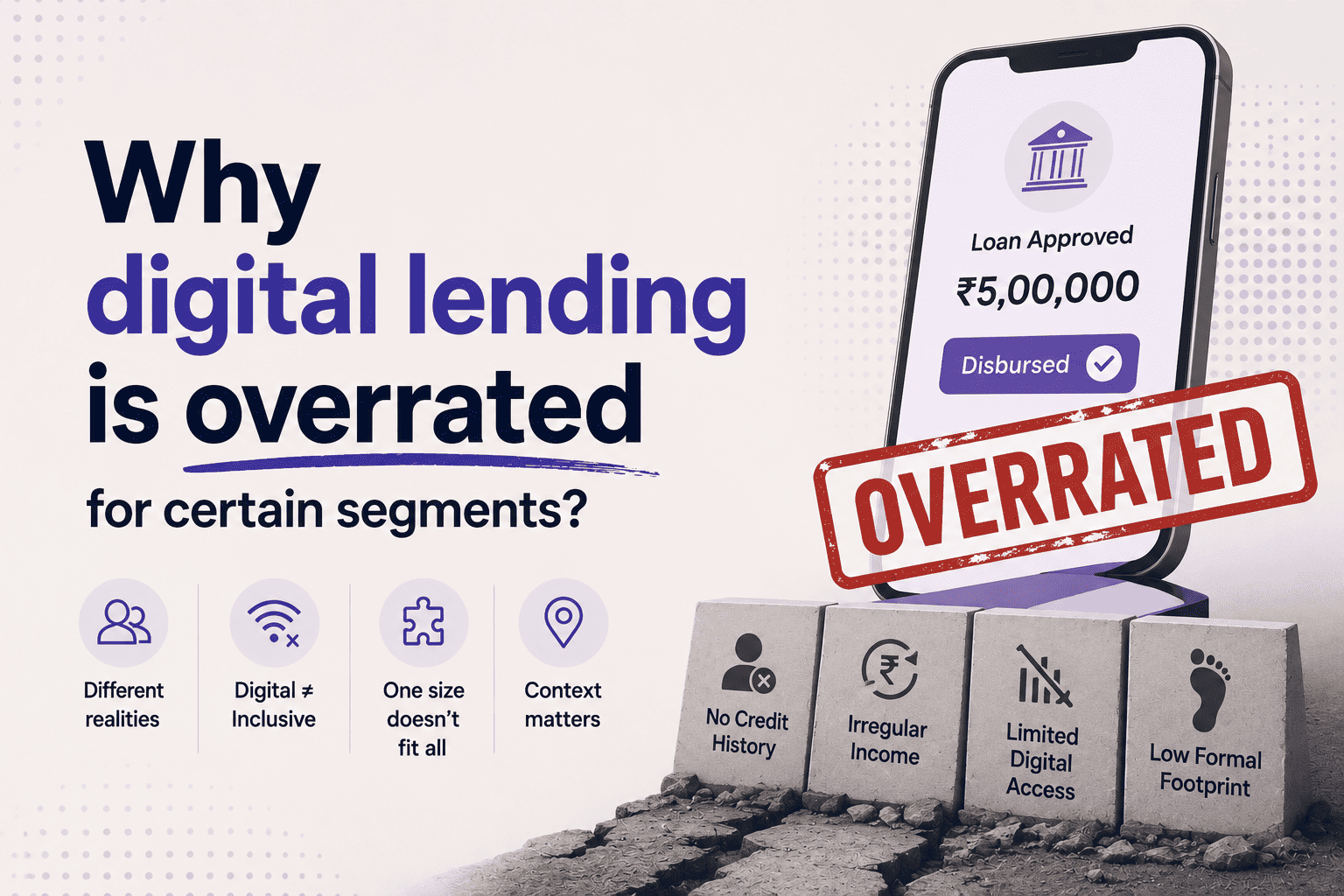
Nonetheless, digital lending cannot bring value to all segments equally. Digital lending’s effectiveness depends largely on characteristics specific to each segment, data availability, borrower behaviour, and regulatory requirements. In some cases, the use of digital lending can be exaggerated not due to the shortcomings of the technology itself but rather due to the conditions surrounding its use. This makes those who choose to adopt digital lending without discretion vulnerable to inefficient loan origination, mispriced risk, and poor customer engagement.
The following discussion provides an overview of segments in which digital lending has been exaggerated and what to consider when adopting digital lending strategies.
Complexity of Segments and Limited Data
The success of digital lending depends on having accurate, high-quality data, and information. When a segment consists of borrowers with informal incomes, irregular cash flows, or inconsistent documentation, digital signals tend to serve as inadequate proxies for creditworthiness. Despite the promise of alternative data and advanced analytical models in overcoming such limitations, their effectiveness greatly differs among different customer segments. Physical verification, past relationships, and judgment are critical factors in these cases. Relying excessively on digital signals may either cause adverse selection or be overly conservative, thus affecting the portfolio’s quality.
Product Design and Customer Journey Mismatch
Every credit product is not ideal for being delivered entirely digitally. Large-ticket, long-term loans, and loans with complex collateral structures require more intensive customer engagement and comprehensive assessment procedures. The process of simplifying those operations into digital journeys leads to suboptimal risk assessment and miscommunication of terms. For segments where such loans dominate, assisted and hybrid models demonstrate better performance compared to fully digital journeys.
Operating Dynamics of Regulatory & Compliance Frameworks
The regulatory regime has matured to the extent that regulated firms now face responsibility towards their borrowers regardless of whether third-party platforms are used for loan disbursement or other related activities. This includes matters related to disclosure, grievance handling, use of customer data, and collection. For sectors where customers lack financial literacy skills or pose a greater risk profile, this becomes particularly challenging from an operational standpoint. For instance, a digital platform without a robust compliance framework could lead to communication disconnects, complaints, and legal risks. As such, evaluating the feasibility of digital compliance execution is as crucial as understanding growth dynamics.
Customer Experience as a Performance Variable
For online lending, the experience of the customer is usually thought of as improving itself by virtue of the speed and convenience it offers. But this is not always true. In some segments, where there is a
need for trust-building, clarity, and post-disbursement follow-up, the digitization process can become a source of friction rather than convenience. The borrower may find it difficult to understand the terms of the loan, the procedure for repaying it, or solving problems. These problems do not only affect the experience but also affect the ability to collect and reuse services.
Embedded Finance and Channel Governance
Embedded finance and platform led sourcing have broadened the scope of digital lending, but they have also created a complex layer that may cause problems. If digital loans are sourced from third party ecosystems, then the ability to manage customer acquisition, communication, and behavior is fragmented. In some high-risk segments, this fragmented approach to managing loans might impact loan selection criteria and borrower accountability throughout the loan cycle. Simply put, digital lending cannot guarantee quality portfolios unless there is sufficient channel governance.
Technology Capabilities and Model Risk Management
Digital lending involves both customer journey management and back-end technology management. As we know, there are some segments where customer variability is high, and data sources are not always reliable. Thus, the accuracy of digital lending models could be impacted if the models are not monitored and managed on a continuous basis. Therefore, financial institutions should evaluate whether they have adequate technology capabilities to manage model risk, ensure transparency, and manage data across multiple channels and platforms.
Assumptions about Cost Structure and Scalability in Operational Economics
The perception of the digital format being cost-effective and highly scalable tends to hold true for standardized, high volume segments only. In more intervention-demanding segments, additional costs may be associated with extra measures of verification, exception management, customer service, and collection activity. Failing to account for this, the business may fail to improve unit economics, while simply growing in volume. Understanding segment-specific cost drivers is important, prior to making an investment in digital.
Structured Approach to Segment Readiness for Digital Lending
For a structured evaluation of segment suitability for digital, multiple factors should be considered. Among these are data quality and availability, complexity of the product, regulatory risk, customer behavior, channel configuration, technological capabilities, and cost considerations. In case, where all factors point in the right direction, a digital first strategy will be the best fit. In other scenarios, hybrid formats might prove superior.
The potential of digital lending may appear to be the panacea for the problem of distribution, but the value of the digital lending model becomes apparent when applied selectively and contextually. When applied to market segments characterized by abundance of data, standardized products, and simpler consumer journey, the digital lending model yields tremendous potential; however, in other cases, it brings problems instead.
An efficient approach means taking away the notion that digitization per se is a better option. Rather, financial organizations have to focus on identifying areas where digital can help in decision making, improve the customer experience, and boost the economics. The application of digital lending should not be viewed as a general statement but rather as a specific one.