

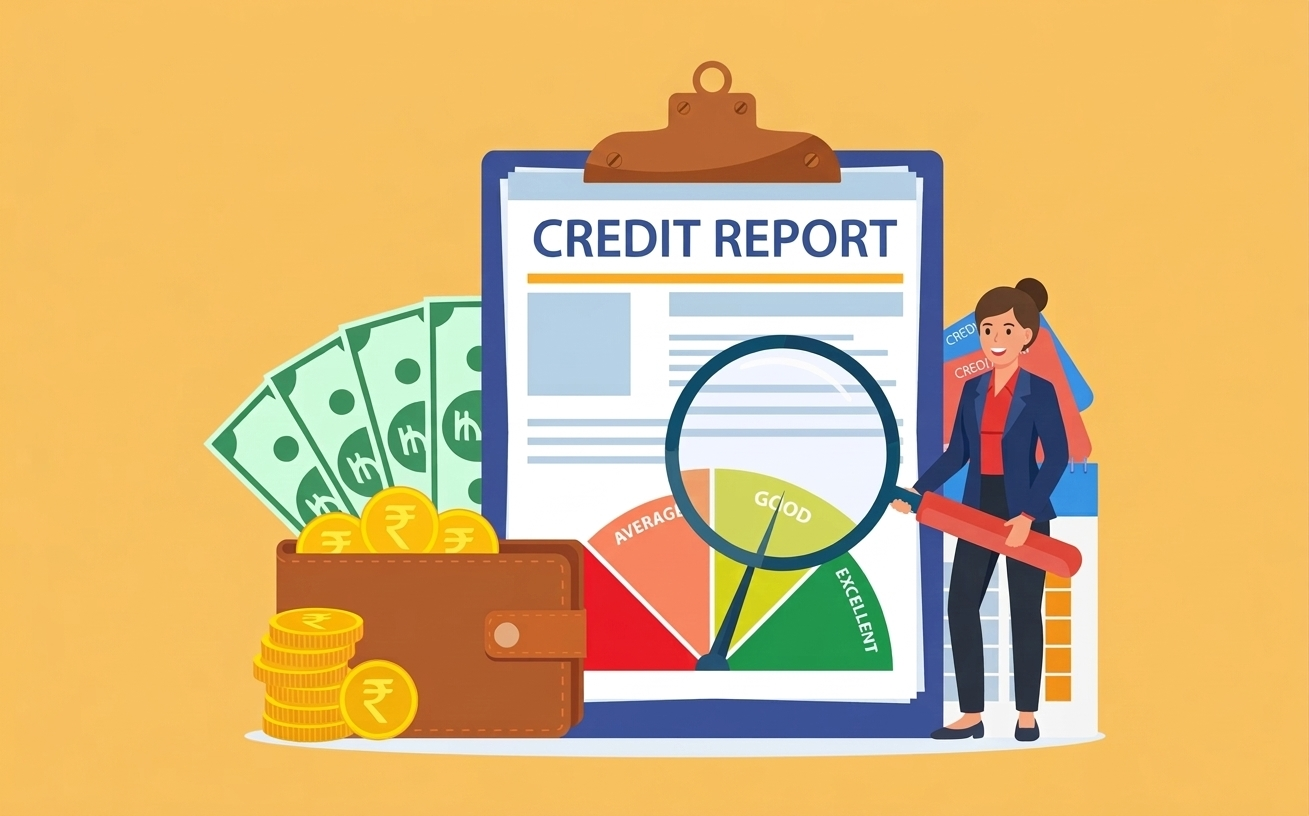
For many borrowers, a credit score often feels like a mysterious number that determines whether a loan application is approved or rejected. However, a credit score is not a judgement but a reflection of an individual’s financial behaviour. While the credit score offers a quick snapshot of creditworthiness, the true narrative lies within the Credit Report, which presents a detailed account of a borrower’s credit journey.
In India’s lending ecosystem, Credit Bureaus such as TransUnion CIBIL, Experian, Equifax, and CRIF High Mark collect credit information from financial institutions and compile it into a structured Credit Report. Lenders rely on this Credit Report to evaluate repayment discipline, existing liabilities, and overall financial reliability before making lending decisions. For borrowers, it serves as an important tool to understand how their financial actions are perceived within the credit system.
A Credit Report captures multiple sections of a borrower’s financial profile, including personal identification details, credit accounts, repayment behaviour, and credit enquiries. Although personal information such as name, address, and identification details does not directly influence the credit score, accuracy in this section remains essential. Errors or inconsistencies may result in duplicate records or incorrectly mapped accounts, issues that often go unnoticed until a loan application is rejected.
The core of the Credit Report lies within the account information section, which provides a comprehensive record of all credit facilities availed or guaranteed by the borrower. This section includes key details such as sanctioned loan amounts, outstanding balances, account status and tenure. Lenders closely analyse this information to assess overall credit exposure and repayment capacity.
Repayment history adds another critical dimension to the Credit Report. Month-by-month payment records indicate whether loan EMIs and credit card dues have been serviced on time. Consistent repayment behaviour demonstrates financial stability, whereas repeated delays may signal cash flow stress and influence lending decisions. While clearing overdue amounts improves credit score, historical repayment behaviour continues to remain visible to lenders, making long-term consistency far more significant than short-term corrections.
An equally important yet often overlooked component of the Credit Report is the enquiry section. There are two types of enquiries, hard enquiries and soft enquiries. Each time a borrower applies for credit, lenders conduct a hard enquiry, which becomes part of the credit history. Soft enquiries, on the other hand, occur when individuals check their own credit or when companies review it for pre-approved offers, and these do not affect the credit score. Multiple hard enquiries within a short period may indicate increased dependence on credit and can make lenders cautious. Strategic credit planning therefore plays an important role in maintaining a strong and stable credit profile.
The credit score itself functions as a summary derived from the broader Credit Report. It serves as the headline, offering lenders an immediate reference point, while the Credit Report provides the complete context behind that number. Borrowers with similar credit scores may still be evaluated differently depending on factors such as repayment consistency, credit age, outstanding obligations, and borrowing behaviour reflected within the Credit Report.
Understanding the Credit Report enables borrowers to move beyond focusing solely on the credit score and instead take control of their overall financial narrative. By reading beyond the number, individuals gain clarity on their financial standing, identify areas requiring improvement, and make more informed credit decisions. In an increasingly data-driven lending environment, awareness and accuracy are essential for building a credible and sustainable financial future.
Your credit score may open or close doors, but your Credit Report explains why those doors move. By understanding the story behind your credit score, you gain clearer insight into your financial journey and can make more informed decisions for the future.